Cupping Therapy
A hands-on treatment approach to help address pain, tightness, and soft-tissue dysfunction.
At Bryn Mawr Sports Rehab & Physical Therapy, cupping may be used as part of an individualized plan to improve tissue quality, decrease pain, and improve function.
What Is Cupping Therapy?
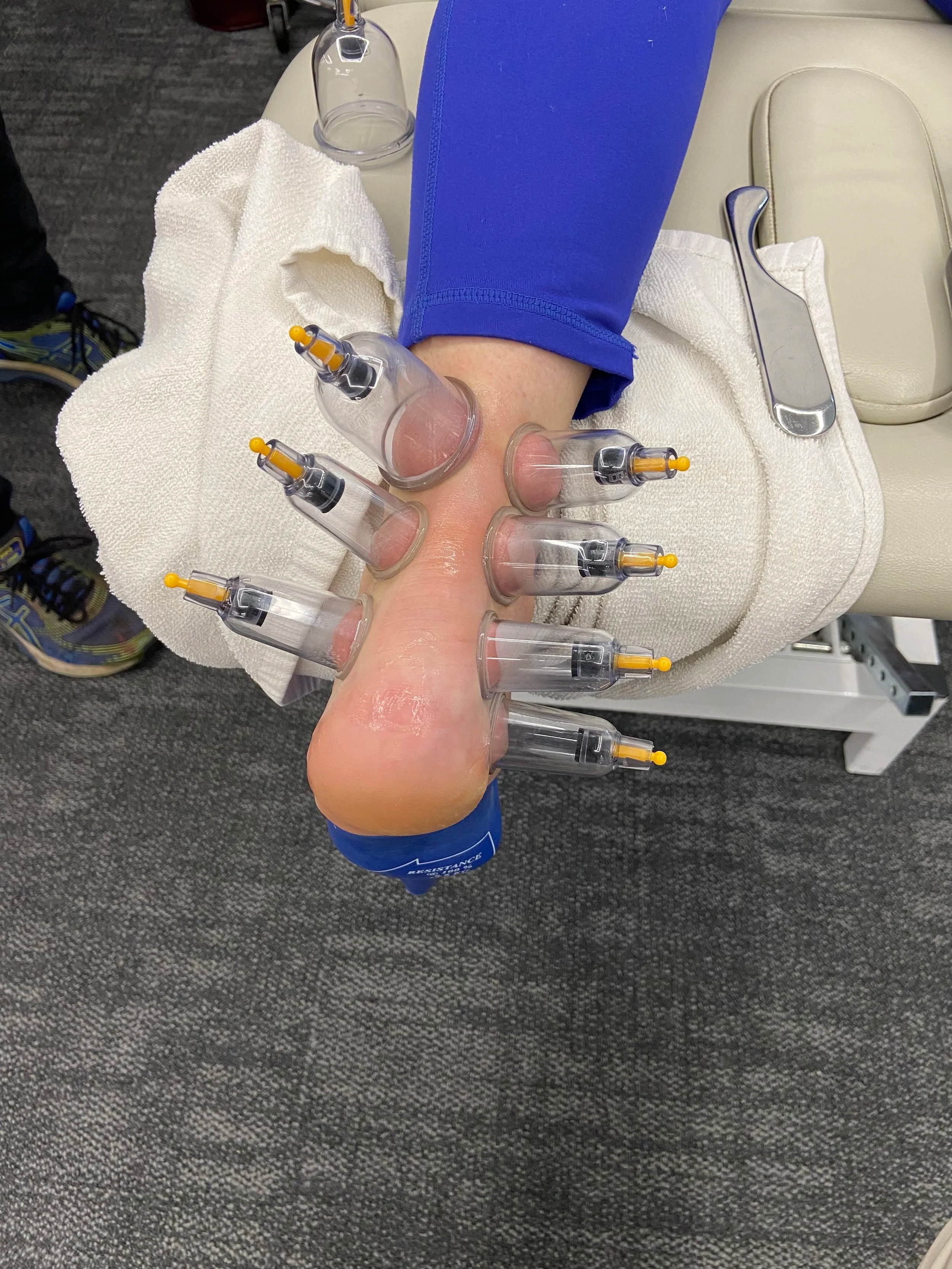
Cupping Therapy stems back to ancient Chinese practice and is an alternative form of medicine. It involves placing various sized cups on areas of pain or dysfunction and creating local suction at these points for a short period of time.
Cupping can be performed separately or in conjunction with other manual techniques. At BMSR, your physical therapist considers it as one potential tool within a plan designed around your needs, goals, medical history, and comfort.
How Cupping May Help
Multiple theories exist as to how cupping may be beneficial. The local suction may improve circulation, provide a traction stimulus to trigger points to decrease pain, and may provide mild detoxification of the area by removing toxins.
Our focus is always functional: using appropriate techniques to help you move more comfortably and return to the activities that matter to you.
Supports Circulation
Cupping may help improve blood circulation in the treated area.
Addresses Trigger Points
The traction stimulus created by the cups may help decrease pain associated with trigger points.
Improves Tissue Quality
When used with other manual techniques, cupping may help improve tissue quality, decrease pain, and improve function.
When Cupping May Be Useful
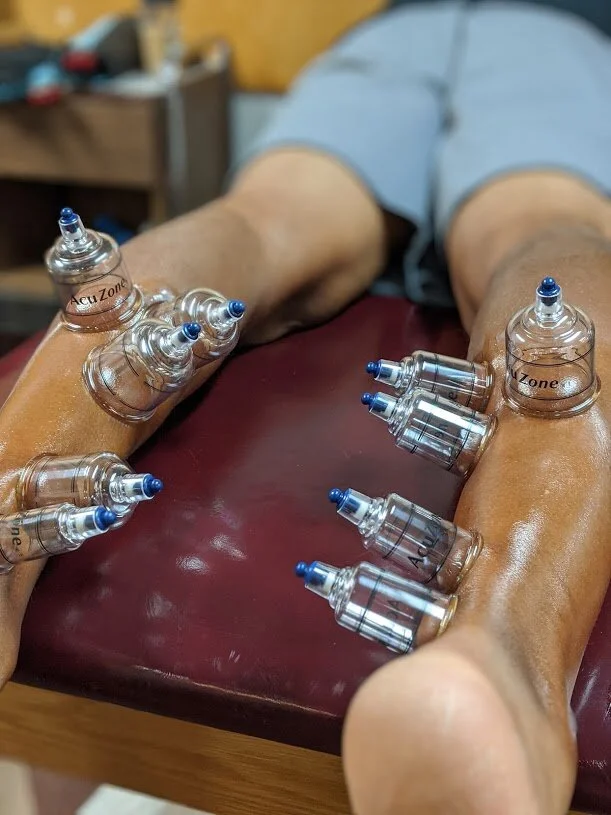
Cupping may be useful for people with soft-tissue concerns that are limiting comfort or movement. Your therapist will determine whether it is an appropriate addition to your care.
Following Surgery
For soft-tissue deficits and scar adhesions following surgery.
Chronic Tightness
For chronic stiffness or tightness in muscles.
After Exercise
For muscle soreness following exercise.
Personalized, Therapist-Guided Care
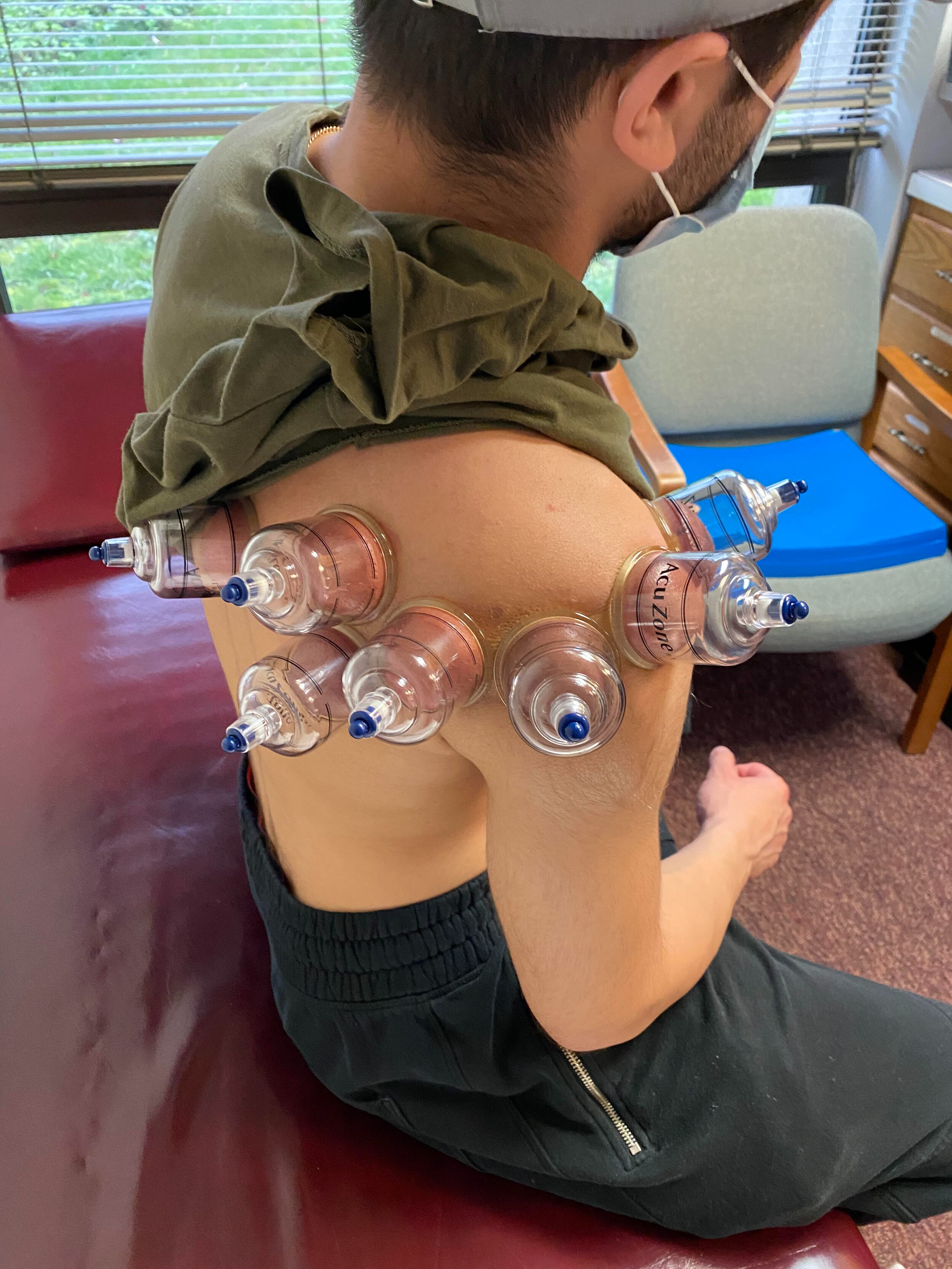
All of our therapists are knowledgeable in cupping techniques, indications for use, and contraindications for cupping. Before deciding whether cupping is right for you, your physical therapist will complete a thorough evaluation and discuss your medical history and level of comfort.
Cupping may be used on its own or alongside other manual therapy techniques as part of your rehabilitation plan.