Blood Flow Restriction Training
Build strength and improve muscle function with lighter loads.
BFR is a supervised therapeutic technique used in physical therapy and sports rehabilitation to support recovery, strength, and performance.
What Is Blood Flow Restriction?
Blood flow restriction (BFR) is a therapeutic technique that uses a specialized tourniquet system to partially restrict blood flow to muscles during exercise. It has become a valuable tool in physical therapy and sports rehabilitation because it can enhance muscle strength and improve muscle growth while using lighter loads.
At Bryn Mawr Sports Rehab & Physical Therapy, BFR is applied as part of a supervised, individualized rehabilitation or training program. It may help patients exercise effectively when high-intensity training or heavy mechanical loading is not appropriate.

1. Specialized Cuff
A specialized cuff or band is placed around the limb being targeted to partially reduce blood flow during exercise.
2. Low Load, High Repetitions
You perform controlled exercise with lighter weights. Muscles experience metabolic stress and fatigue more quickly than with traditional resistance training.
3. Strength-Building Response
The technique can promote muscle hypertrophy and strength gains, and is believed to stimulate growth factors and hormones that contribute to muscle development.
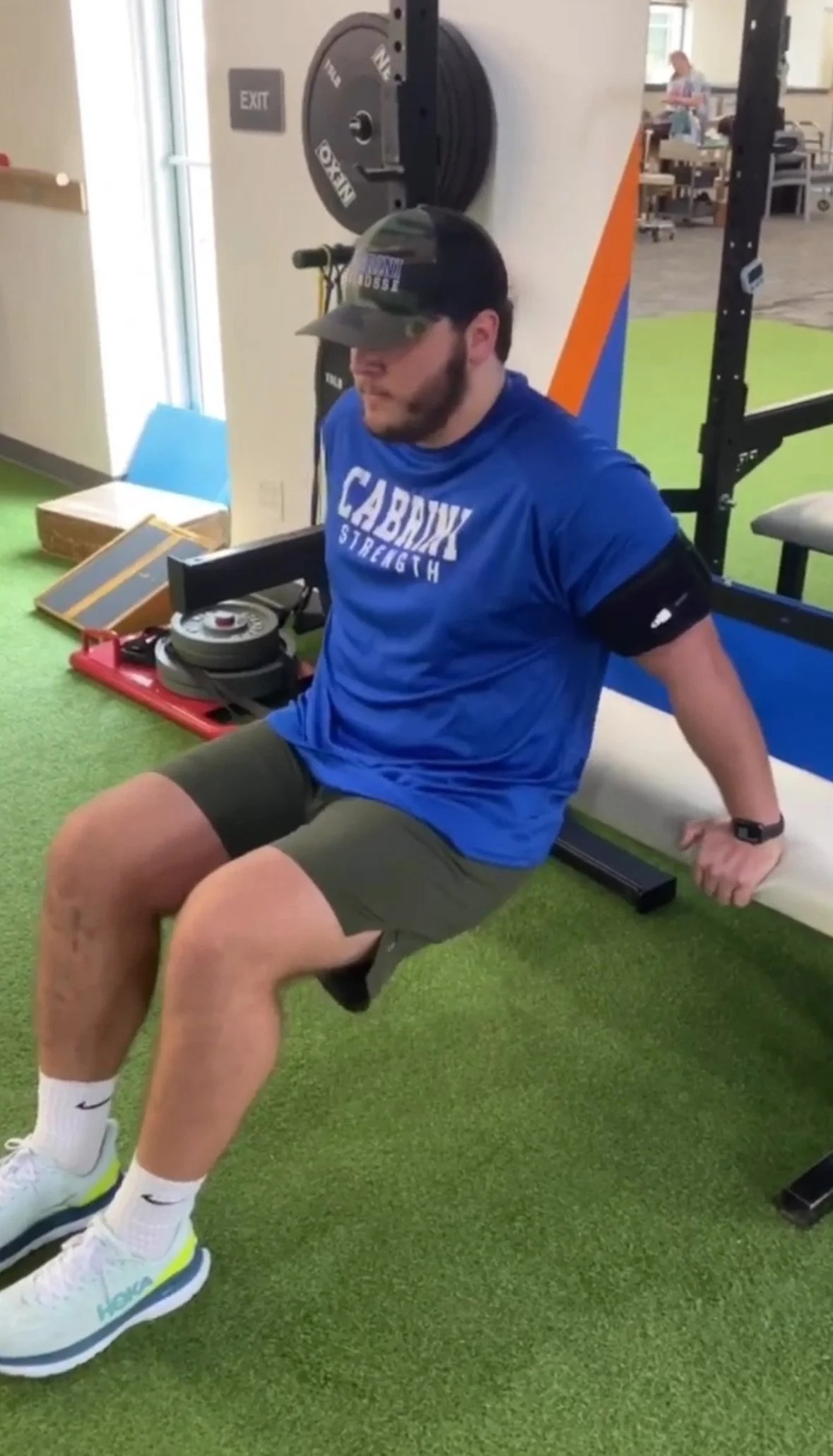
Why Use BFR in Rehabilitation?
BFR allows patients to exercise with low loads at high repetitions to create positive changes in muscle strength, volume, hypertrophy, and endurance. It may also have analgesic effects.
Properly supervised and controlled use of BFR has shown promising results for improving muscle strength and function, particularly for people whose condition or limitations make high-intensity training difficult. The lower-load approach can help patients continue working toward their strength goals without the same heavy mechanical stress on joints and muscles.
Who Can Benefit From BFR?
BFR can be beneficial for a range of patients and athletes. Your therapist will determine whether it is an appropriate addition to your plan of care.
Recovering Athletes
Athletes recovering from injuries may use BFR to help maintain muscle strength. High-level and recreational athletes may also use it as part of a training program.
Post-Surgery & Joint Limitations
Post-surgery patients, and individuals with joint pain or arthritis, may build muscle function with low-intensity exercise rather than heavy loads.
Strength & Endurance Goals
Older adults seeking to safely increase muscle mass and strength, and people restricted from high-impact activity who want to improve endurance, may benefit from BFR.
A Supervised Part of Your Plan
Many surgeons in the area now request that patients incorporate BFR into their rehabilitation program. BMSR is happy to provide and oversee BFR protocols for these clients.
For athletes, BFR can be used on a recovery day to provide a productive workout without heavy mechanical loads or stress, allowing joints and muscles time to recuperate. BFR is one tool that can be integrated with a personalized physical therapy program to support your goals.
Explore Our Treatment Approach
Discover other services that may be incorporated into an individualized rehabilitation and performance program.
Sports Rehabilitation
Movement analysis and rehabilitation designed to support your return to activity.
Biodex Isokinetic Training
Controlled, variable resistance training and objective strength monitoring through a full range of motion.
Recovery & Performance Technology
Learn about advanced tools used to support recovery, rehabilitation, and performance goals.